Request a site inspection

Water

Tunnel water ingress controlLeaks and inflow stopped in tunnels, shafts and underground structures.Crack and joint injectionLeaking cracks and joints sealed, and structural cracks bonded, in concrete and masonry.Waterproofing and polyurea liningsPU membranes and polyurea linings for decks, tanks, tunnels and water structures.

Tunnels

Pre- and post-excavation groutingWater cut off and weak ground consolidated ahead of the face; voids closed behind it.Cavity and void fillingVoids above tunnel crowns, behind linings and under slabs filled without loading the support.Tunnel rehabilitationOld and operating tunnels: seepage stopped, ground consolidated and lining repaired, under traffic.

Ground

Track and slab re-levellingSettled ballastless track and slabs lifted back to level by PU injection, on live lines.Permeation and chemical groutingWeak, loose or wet ground strengthened and sealed by resins and gels that fill it without moving it.TAM groutingStaged grouting through sleeve pipes for shafts, foundations and deep excavations.Curtain and consolidation groutingSeepage cut-offs and foundation consolidation for dams, barrages, shafts and structures.Ground investigation and monitoringERT, GPR and MASW surveys, boreholes, lab tests and instruments, before and after treatment.

Rock, slopes and mines

Rock bolting and self-drilling anchorsRock bolts, self-drilling and prestressed anchors for tunnels, portals, slopes and caverns.Slope stabilisationSoil nails, anchors, mesh, drainage and rockfall barriers for slopes above roads, railways and towns.Mine shaft and strata treatmentWater sealed in shafts and declines; weak roof and face strata consolidated with resins and bolts.
All services →Grouts and resins we make →

Railways

RailwaysSettled track, transition zones and wet tunnels on running lines.

Tunnels and metro

Tunnels and metroWater, cavities and weak ground in tunnels, shafts and metro works.

Hydropower and dams

Hydropower and damsSeepage, foundations, tunnels and slopes on hydro projects.

Mining

MiningWater in shafts and declines, and weak strata at faces and in roadways.

Water, ports and highways

Water, ports and highwaysWater tunnels and shafts, micro tunnels, pipelines, manholes and highway slopes.

Heritage and buildings

Heritage and buildingsSettlement, cracks and leaks in heritage structures and buildings in use.
All industries →Projects →

Services

Tunnel water ingress controlPre- and post-excavation groutingCavity and void fillingTunnel rehabilitationTrack and slab re-levellingPermeation and chemical groutingTAM groutingCurtain and consolidation groutingRock bolting and self-drilling anchorsSlope stabilisationCrack and joint injectionWaterproofing and polyurea liningsMine shaft and strata treatmentGround investigation and monitoring

Industries

RailwaysTunnels and metroHydropower and damsMiningWater, ports and highwaysHeritage and buildings

Sales

+91 99100 18144WhatsApp +91 99100 18144connect@geoconstech.com

Rock, slopes and mines

Rock bolting and self-drilling anchors

Jointed rock fails along its joints. Bolts and anchors pin the loose block to the sound rock behind it. In broken ground, where a drilled hole will not stay open, a self-drilling anchor drills its own hole, stays in it, and is grouted through its own hollow bar.

When to call us

The signs

  • Tunnel crowns and walls in jointed or blocky rock.
  • Portals and cuttings with blocks that can slide or topple.
  • Caverns, shafts and declines.
  • Slopes above roads and railways.
  • Ground that collapses before a conventional bolt can be put in.
Self-drilling rock bolts across a jointSection through a jointed rock face. A block above a joint that dips out of the face is pinned to sound rock by hollow self-drilling bars, each drilled with a sacrificial bit and grouted through the bar, with a plate and nut at the face. JOINTSOUND ROCKFACE123456
  1. Note 1: A joint dipping out of the face: the block above it can slide.
  2. Note 2: Hollow self-drilling bar with a sacrificial bit. It drills the hole and stays in it.
  3. Note 3: Grout pumped through the bar fills the hole and the joints it crosses.
  4. Note 4: Couplers extend the bar to the length the design needs.
  5. Note 5: Plate and nut lock the face once the grout has set.
  6. Note 6: A set share of bolts is pull-out tested.
Geo Constech
Rock bolting · Section
Schematic · Not to scale

How we do it

Method, step by step

  1. Map the joints

    Orientation and spacing of the joints, and the blocks they form.

  2. Design

    Bolt type, length, spacing, angle and capacity.

  3. Drill and install

    Conventional bolts where the hole stands; self-drilling anchors where it does not.

  4. Grout

    Through the hollow bar, filling the hole and the joints it crosses.

  5. Lock and test

    Plate and nut once the grout has set; pull-out tests on a set share of bolts.

What we use

Made at our plant in Alwar

Quality

Checks and proof

  • Drilled length and angle recorded per bolt.
  • Grout take and return recorded.
  • Pull-out tests on a set share, to the load the design calls for.

On record

Where we have done it

Hydropower · Himachal Pradesh

Rampur Hydro Electric Project

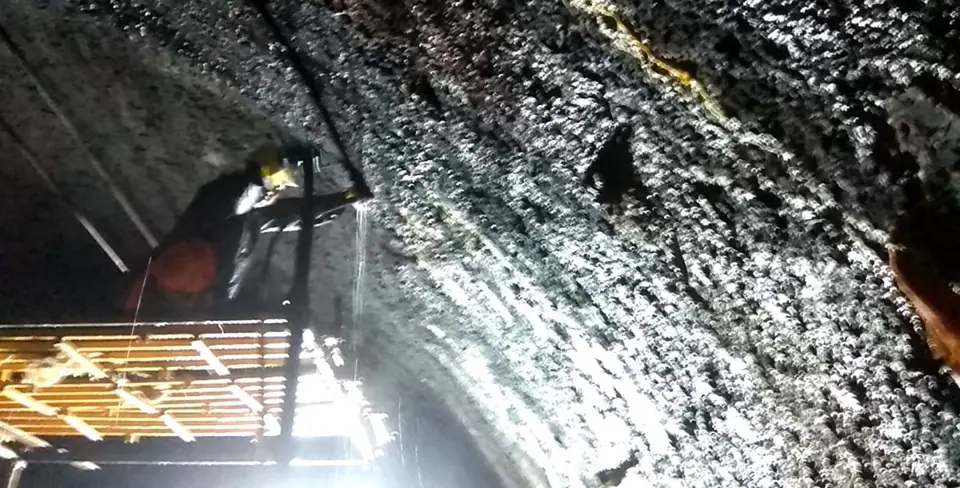
Rock bolting in loose, fissured strata on a 412 MW hydro project in the Sutlej valley.
Project record

Railways · Tunnels · Thane–Kalyan, Maharashtra

Parsik tunnel, Thane–Kalyan

Seepage controlled in a brick-lined railway tunnel built in 1916, on a busy main line, without stopping the trains.

Certified

Ports · Micro-tunnel · Pipavav, Gujarat

Micro-tunnel pit, Pipavav

Seawater pouring into a micro-tunnel pit through a crack, after repeated attempts to seal it had failed. Sealed up to 85 per cent by grouting.

Certified

Slopes · Nainital, Uttarakhand

Balia Nala landslide, Nainital

A failing slope over 300 m long and 240 m high, crossed by faults, above the town’s lake outlet. Anchored, grouted and protected.

Project record

Questions

What clients ask

What is a self-drilling anchor?

A hollow threaded bar with a sacrificial drill bit. It drills its own hole, stays in it and is grouted through the bar. In ground where a hole collapses, it saves the separate steps of casing, drilling and inserting.

Are the bolts tested?

Yes. A set share of the bolts is pull-out tested to the load the design calls for.

Seeing this on your site?

Send us what you see, where, and the access or traffic window. An engineer reviews it and replies with the next step.

CallWhatsAppSite inspection