Railways · Tunnels
Tunnel T-77D, USBRL, Banihal
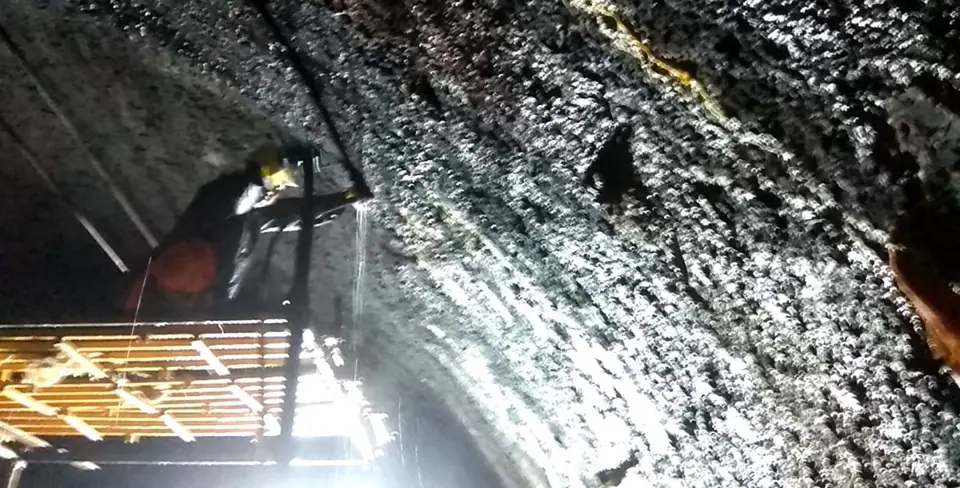
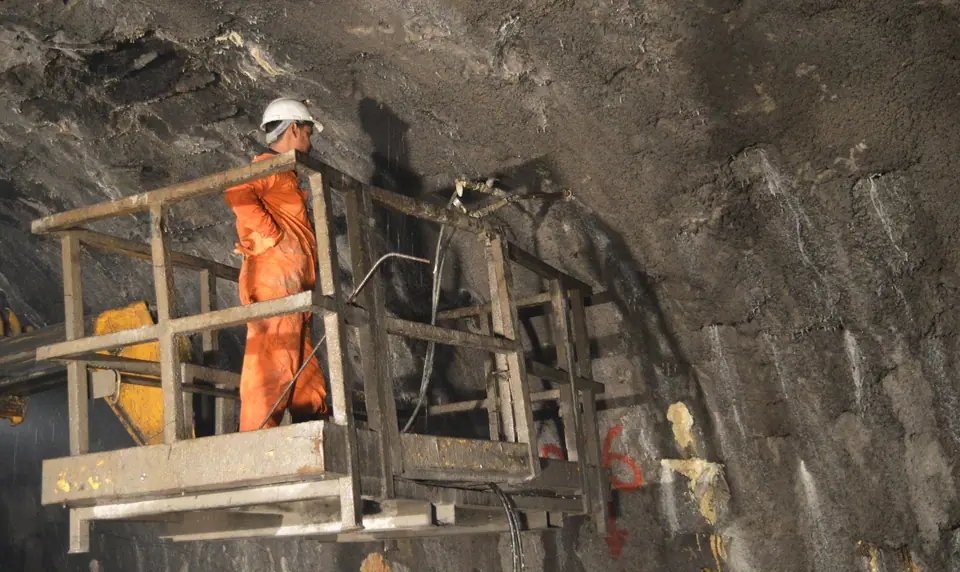
In T-77D near Banihal, a collapse at the crown left a longitudinal cavity of about 8 to 10 m in highly fractured, water-bearing rock under high overburden, below a nallah. The ground surface above began to settle. We filled the cavity and grouted the ground around it so the work could continue safely.
- Location
- Banihal, Jammu & Kashmir
- Type
- Railway tunnel
- Client
- IRCON International Limited
Project recordExecuted by GCPL for IRCON, as confirmed by the company in October 2026.
The problem
A collapse at the crown
- Highly fractured rock with saturated soil.
- Thrusts and faults along the alignment.
- High overburden pressure.
- A nallah over the tunnel.
Challenges
What made it hard
- A cavity of about 8 to 10 m along the crown.
- Weathered rock in the excavation zone.
- Loss of ground water threatening further collapse.
- Settlement at the surface above the tunnel, a concern for the community living there.
What we did
Fill the cavity, consolidate the ground, control the water
- Cavity filling and reinforcement of the ground around the crown.
- Grouting under high pressure.
- Water ingress control.
- 1Note 1: A void above the crown, left by a collapse or by overbreak.
- 2Note 2: Loose material that keeps running if it is disturbed.
- 3Note 3: Steel ribs and shotcrete holding the opening.
- 4Note 4: Pipes or self-drilling anchors drilled through the support into the void.
- 5Note 5: High-foaming PU fills the void from the bottom up and binds the loose material.
- 6Note 6: Cured foam is light, so it adds little load to the support below it.
- 7Note 7: Check holes and pressure readings confirm the void is full before the next advance.
Services on this job
Methods used
Project recordExecuted by GCPL for IRCON, as confirmed by the company in October 2026.
More projects
Similar work
T-46 P2, Sangaldan, USBRL
Ballastless track that settled further every monsoon, lifted back to its design profile on a live line, with the ground beneath made stable.
Parsik tunnel, Thane–Kalyan
Seepage controlled in a brick-lined railway tunnel built in 1916, on a busy main line, without stopping the trains.
USBRL tunnels T-1, T-3 and T-5, Katra
Heavy water ingress in Himalayan tunnels, controlled with our resin, grout design and crews: recorded by Northern Railway at up to 2,500 litres per minute.
A similar problem on your site?
An engineer reviews it and replies with the next step.