Modern construction projects often face difficult ground conditions. However, with the right techniques, these challenges can be managed effectively. At Geo Constech, advanced solutions like compressible rebounding grout for tunnels and reinforced slope protection are used to improve safety, durability, and long-term performance of structures. In this blog, you will understand both concepts in a simple and practical way.
Understanding Compressible Rebounding Grout for Tunnels
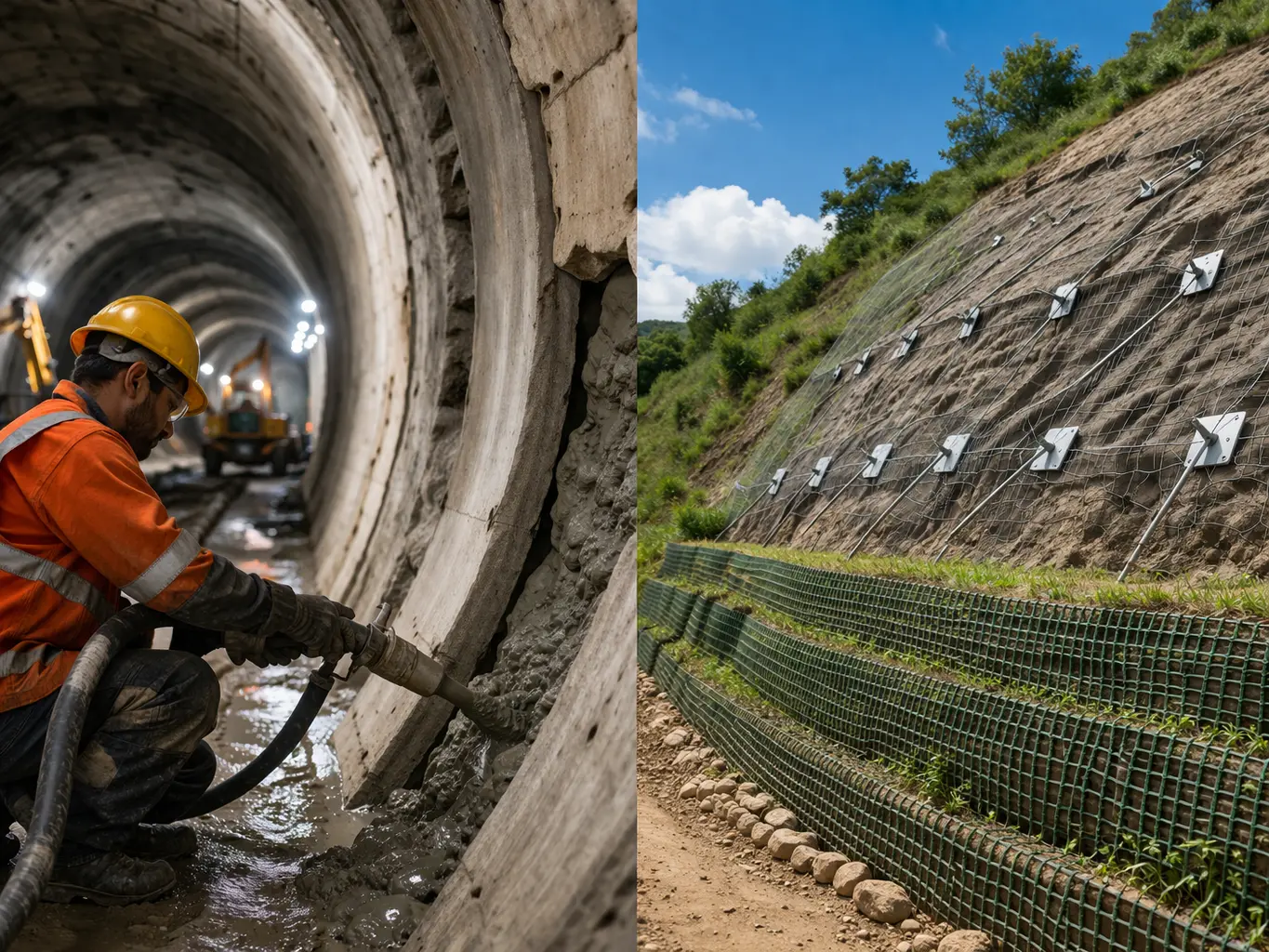
Compressible rebounding grout for tunnels is a special type of material used to fill gaps behind tunnel linings. Unlike traditional grout, it can compress under pressure and then return to its original shape. This unique property makes it highly useful in tunnel construction.
According to Geo Constech’s tunneling services, grouting is essential for filling voids, improving contact between the tunnel lining and surrounding ground, and controlling water seepage. Because tunnels are always exposed to external pressure from soil and rock, this type of grout helps in adjusting to these forces. As a result, the tunnel remains stable and protected over time.
Why Compressible Rebounding Grout is Important
Tunnels are constantly under stress. Therefore, using compressible rebounding grout for tunnels offers several benefits.
First, it effectively fills empty spaces behind the lining, which could otherwise weaken the structure. Next, it improves bonding between the lining and the surrounding ground, which reduces movement. In addition, it helps control water ingress by sealing gaps properly.
Most importantly, its compressible and rebounding nature allows it to absorb pressure without cracking. Because of this flexibility, the tunnel structure can handle changing ground conditions more safely and efficiently.
This method is commonly used in metro tunnels, hydropower tunnels, underground utility systems, and even in tunnel repair projects where stability is critical.
What is Reinforced Slope Protection
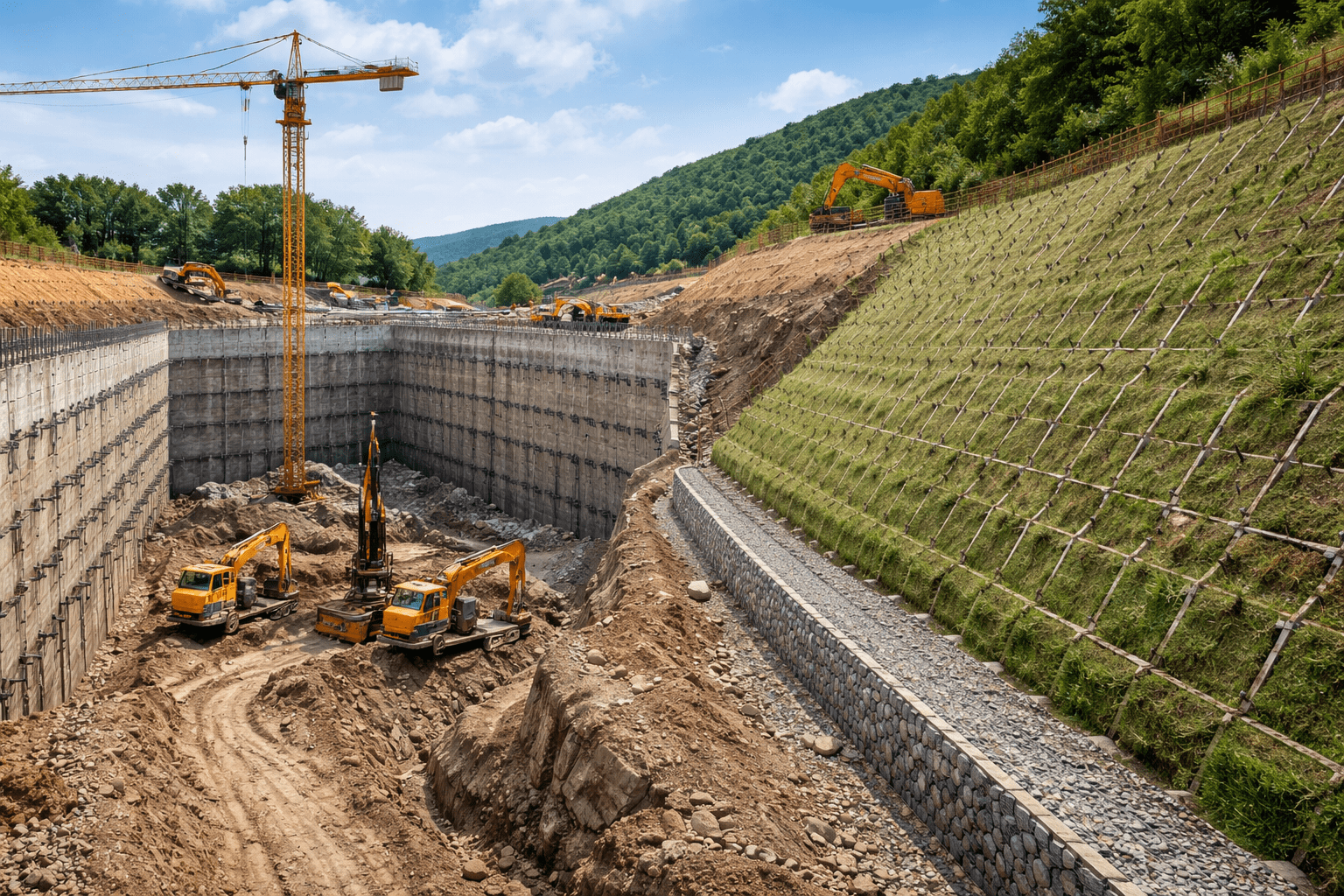
Reinforced slope protection is a method used to stabilize slopes and prevent soil from sliding or eroding. Slopes can be found along highways, railways, construction sites, and hilly terrains. Without proper support, these slopes can become unstable and dangerous.
As highlighted in Geo Constech’s slope stabilization services, reinforcement techniques strengthen the soil and protect it from external factors like rainfall, gravity, and ground movement. Because of this, slopes remain stable even in challenging conditions.
Why Reinforced Slope Protection is Essential
Slope stability is very important for the safety of nearby structures and people. That is why reinforced slope protection plays a key role in construction projects.
Firstly, it increases soil strength by holding it together with reinforcement materials. Secondly, it controls erosion caused by rainwater or surface runoff. As a result, the soil does not wash away easily.
Moreover, it reduces the risk of landslides. Stabilized slopes are less likely to fail, which protects roads, buildings, and other infrastructure. Therefore, this method helps in avoiding costly damage and ensures long-term safety.
Common Techniques Used in Reinforced Slope Protection
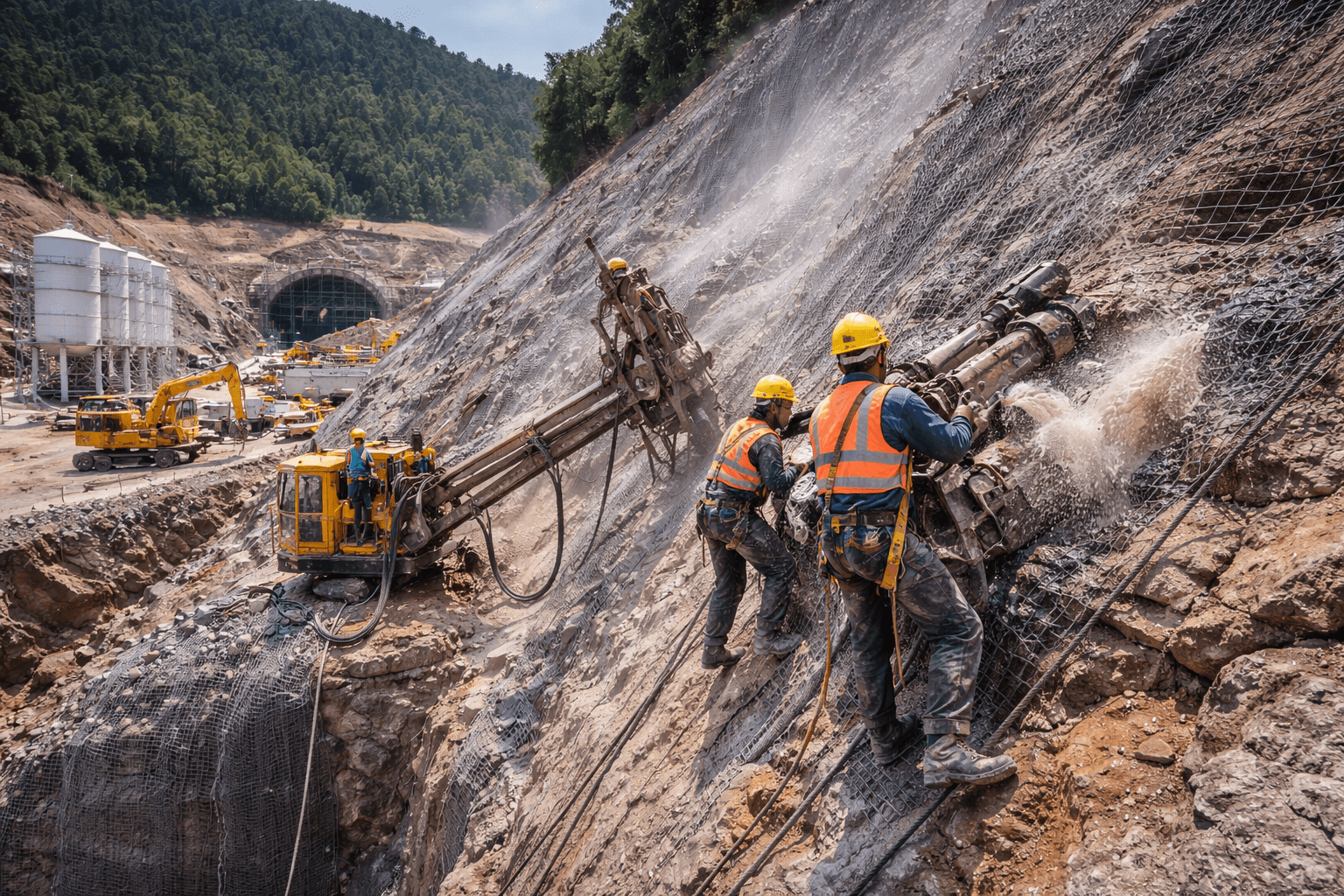
To achieve effective slope stabilization, different techniques are used depending on site conditions. These include soil nailing for internal strength, ground anchors for deep stability, and geosynthetics like geogrids for better load distribution.
In addition, surface protection systems such as mesh are used to prevent erosion. By combining these methods, a strong and durable slope protection system is created. This approach ensures that the slope performs well over time.
How Geo Constech Delivers Effective Solutions
Geo Constech focuses on providing practical and reliable solutions for both tunneling and slope stabilization. For tunnels, the company ensures proper use of compressible rebounding grout for tunnels to fill voids, control water, and maintain structural strength.
At the same time, for slopes, Geo Constech applies reinforced slope protection techniques that improve soil stability and prevent failure. What makes their approach effective is the focus on site-specific solutions. Instead of using a single method everywhere, they select the right combination of techniques based on the project requirements.
Because of this, projects are completed safely and deliver long-lasting results.
Conclusion
In conclusion, both compressible rebounding grout for tunnels and reinforced slope protection are essential for modern infrastructure projects. While grout helps tunnels remain flexible and strong under pressure, slope protection ensures stability and prevents erosion or collapse.
When these techniques are applied correctly, they improve safety, reduce risks, and increase the lifespan of structures. That is why Geo Constech continues to provide dependable solutions for complex engineering challenges.