

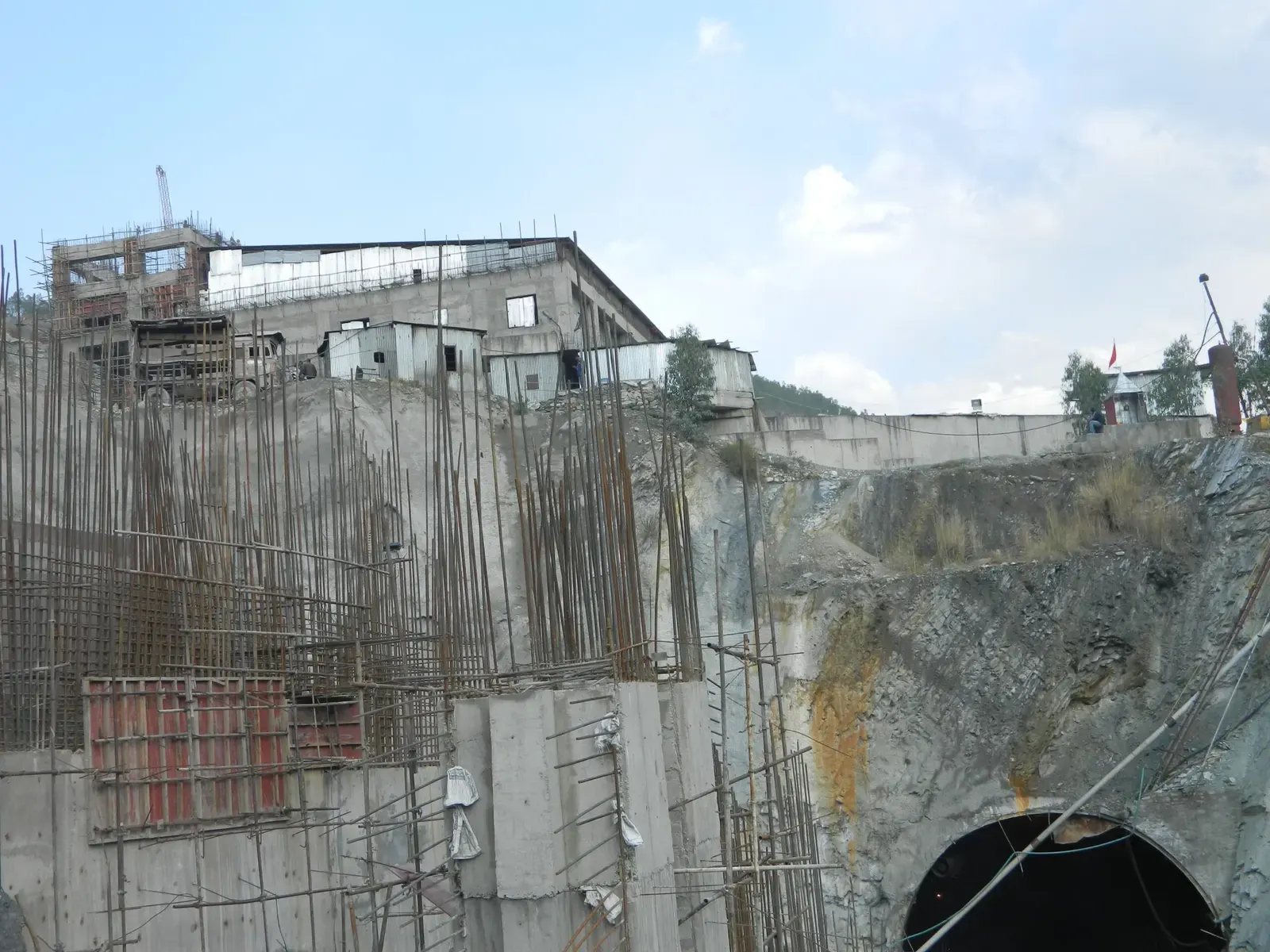
Rampur

The Rampur Hydropower Project, a critical energy infrastructure built to harness the Sutlej River’s potential, overcoming complex geological challenges to ensure sustainable power generation for the nation.

Year
2013
Location
Rampur, Himachal Pradesh
Type
Goverment
Client
Patel Engineering Ltd.

Project Details

  • The Government of India has proposed World Bank aid in financing the proposed Rampur Hydropower Project (Rampur Project), that would be built on the upper reaches of the Sutlej River in the Himachal Pradesh districts of Shimla and Kulu.

  • The Sutlej Jal Vidyut Nigam Limited (SJVN, formerly known as the Nathpa Jhakri Power Corporation, NJPC), a joint venture between the governments of Himachal Pradesh and India, is developing the project.

  • The 412 MW Rampur Hydropower Project is intended to serve as a backup facility to India's largest hydroelectric power plant, the 1,500 MW Nathpa Jhakri.

  • A 15-kilometre underground tunnel will transport water from the Nathpa Jhakri plant downstream to a powerhouse near Bael hamlet in the Kulu area.

Field Condition

  • Loose strata can lead to catastrophe.

  • Probability of slope failure.

  • High overburden pressure

Challenges

  • Sealing the fissure of strata.

  • Presence of loose soil as well as weathered rock mass.

The 412 MW Rampur Hydropower Project, developed as a backup to India’s largest hydroelectric plant, required advanced engineering solutions to address loose strata, high overburden pressure, and slope instability. Precision grouting, fissure sealing, and slope stabilisation techniques were deployed to ensure structural safety and operational reliability. This strategic integration of technology and planning not only mitigated geological risks but also reinforced the project’s role in delivering clean, sustainable energy for decades to come.

Rampur: project photograph 2

1 / 10

Related services

Hydro Projects

Curtain Grouting / Cutoff wall

Curtain grouting, also known as cutoff wall grouting, is a specialized technique used to control groundwater flow and improve subsurface stability beneath dams, tunnels, and hydraulic structures. The process involves systematic injection of grout into soil or rock to form a continuous impermeable barrier. This barrier reduces seepage, strengthens foundations, and enhances the long-term safety of critical infrastructure projects.

Read more

Geotechnical Works

Ground Stabilization & Grouting

Ground Stabilization & Grouting is a critical geotechnical service aimed at improving soil and rock conditions to ensure safe, stable, and durable structures. This process involves injecting specialized grouts into the ground to fill voids, seal cracks, and increase load-bearing capacity. It is widely used in infrastructure, tunneling, foundations, and repair works where weak or unstable ground poses structural risks.

Read more

Engineering is precise. So are we.

Let’s create something meaningful together.